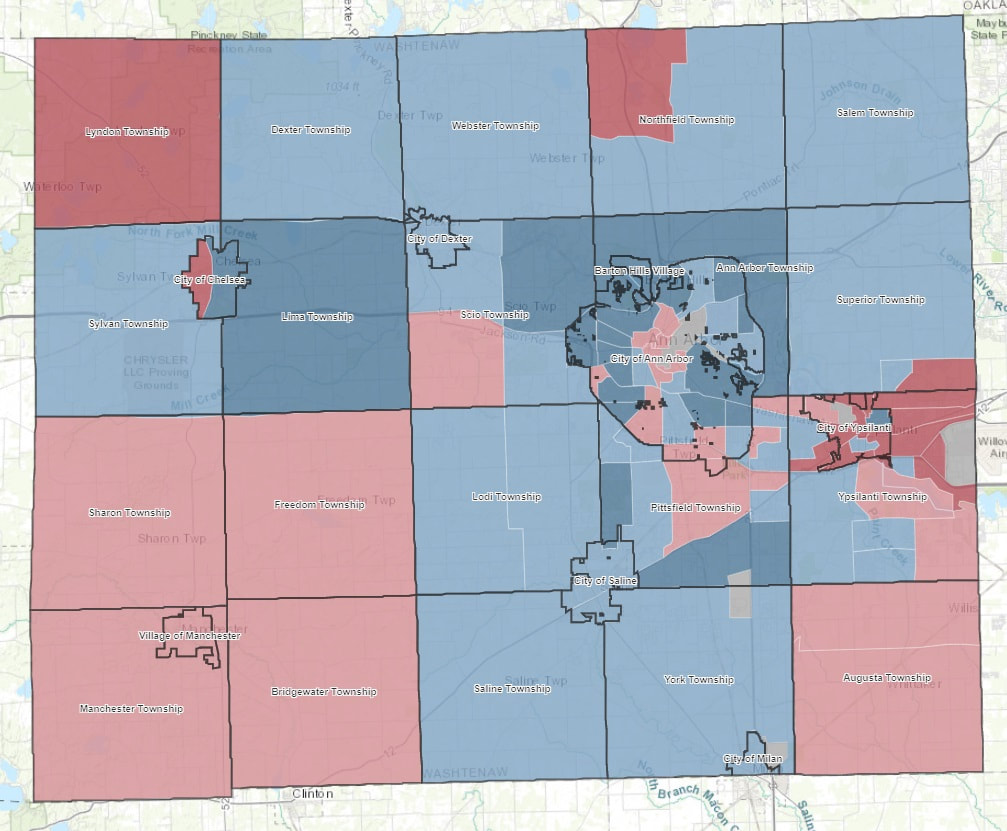
The map shows overall community engagement and stability scores.
When people feel safe in their homes, they are more likely to engage with their neighbors and community. High levels of engagement can have several positive effects on communities.
The Opportunity Index measures community engagement and stability using three measures. These are vacancy status of homes, juvenile criminal charges, and active voters.
The Opportunity Index measures community engagement and stability using three measures. These are vacancy status of homes, juvenile criminal charges, and active voters.
Vacant Homes
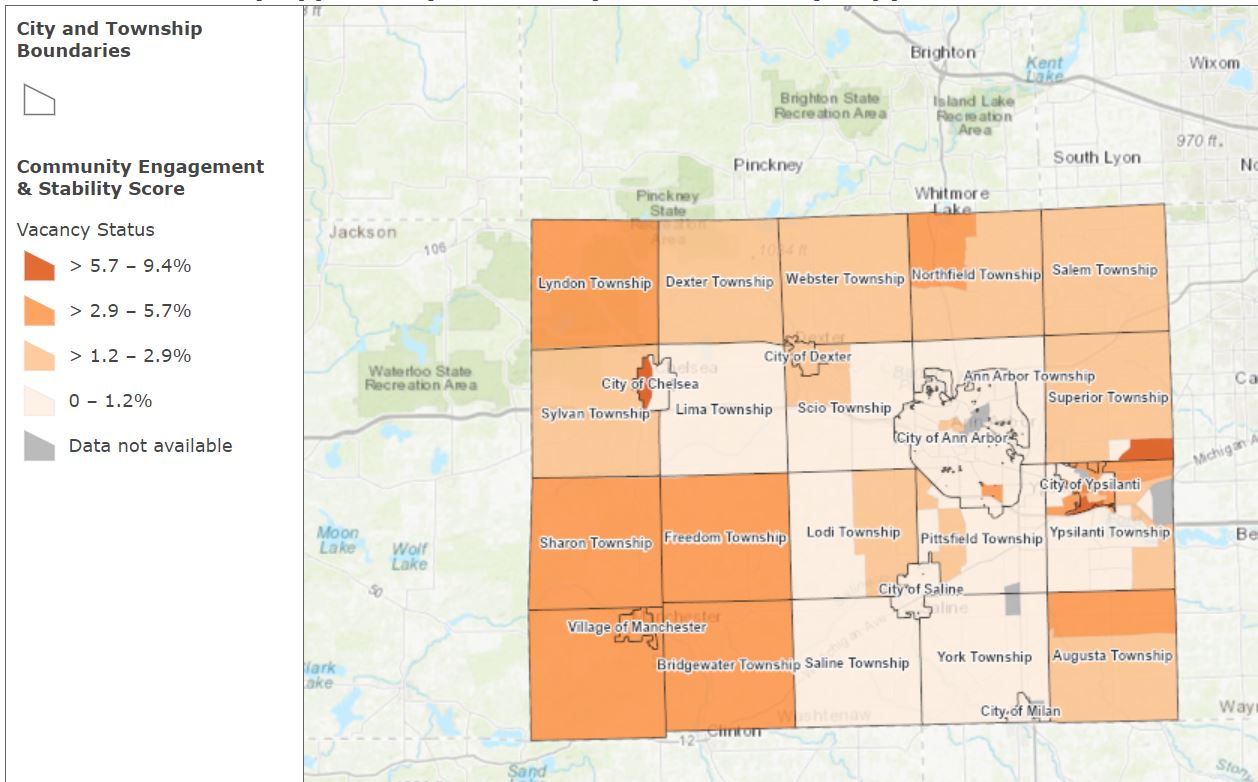
The map shows the percentage of residential properties in each census tract marked as vacant for 36 months or longer.
Vacant houses signal a lack of investment in a neighborhood. Long term vacancy can result in further divestment and increased crime. In some Washtenaw County communities, like most of Ann Arbor, vacancy rates are at or below 1%. In others, including the southside of Ypsilanti, the Westside of Chelsea, and the MacArthur Boulevard neighborhood of Superior Township, the rate can be as high as 8-10%.
Youth Delinquency Charges
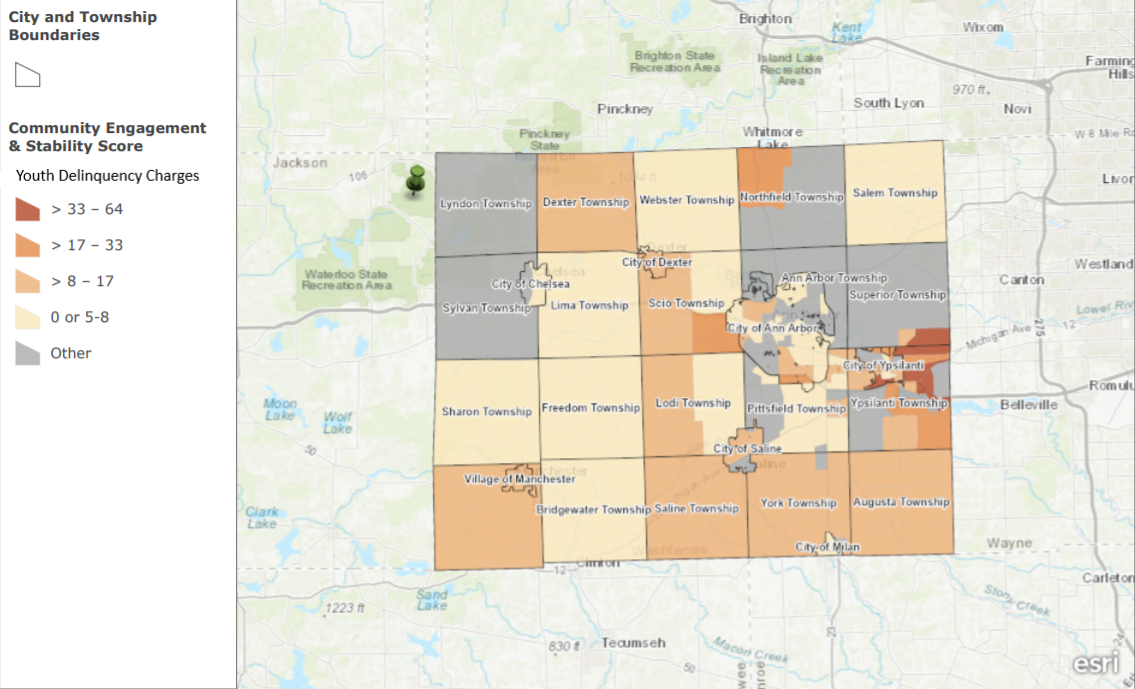
The map shows the number of youth in each census tract charged with one or more criminal offenses in juvenile court. Data are not reported for tracts where 1-4 youth faced criminal charges, in order to protect individuals' privacy. If there were zero youth criminal charges in a census tract, that is reported.
Youth who live on the east side of Washtenaw County and youth of color have higher rates of delinquency charges. This is not because Black youth commit more infractions. This is due to systemic racism that results in more frequent stops by police, higher rates of expulsion from school, and unfair sentences. In Washtenaw County, Black youth convicted of the same charge spend more time detained than non-Black youth. Once a young person makes contact with the criminal justice system, their likelihood of future contact increases.
Some communities view increased police presence as a way to increase engagement and stability in neighborhoods. Others view it as a source of harassment and an increased likelihood that youth will face injustice.
Some communities view increased police presence as a way to increase engagement and stability in neighborhoods. Others view it as a source of harassment and an increased likelihood that youth will face injustice.
Active Voters
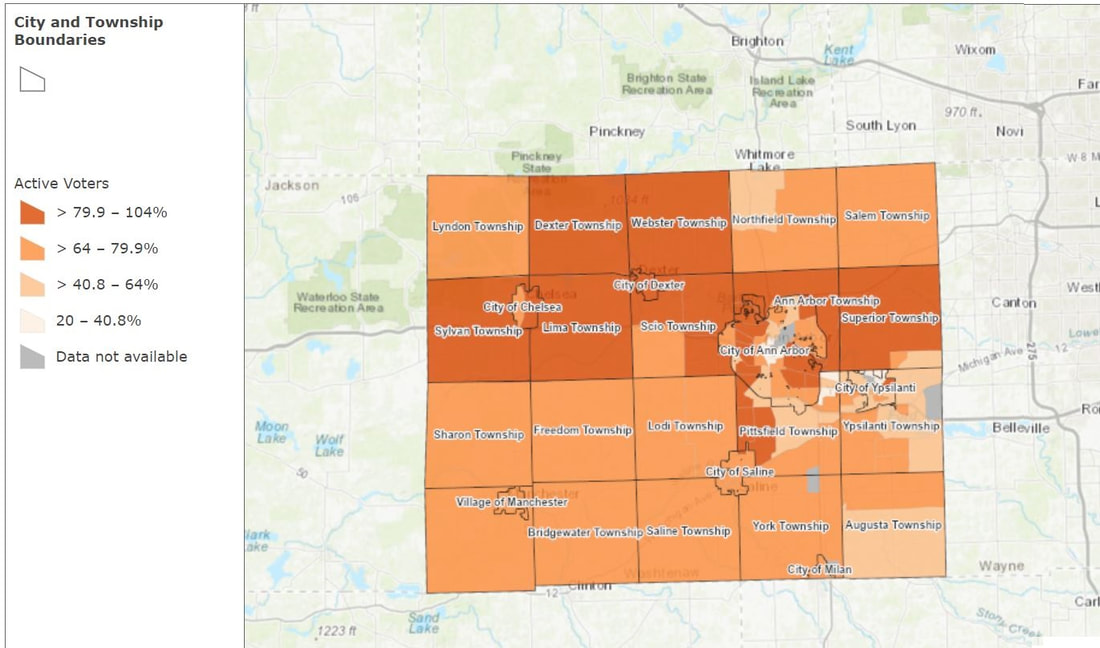
The map shows the percentage of people who voted in the 2018 midterm election, out of the eligible citizen voting population, per census tract.
Communities with low voter turnout are not evenly represented in important decision-making processes. Education and voting history can be predictors of whether a voter will cast a ballot. There are also a variety of structural factors that can drive low turn out as well. These include access to polling places and cost/time to register to vote and cast a ballot. Historic policies like voter ID laws and not allowing former felons to vote that overtly impacted Brown and Black communities has fostered ongoing distrust that continues to affect voter turnout.